

An Interview With Eric L. Pines
The most successful law firm leaders balance legal excellence with business judgment and understand that client service, team culture, and operational efficiency are all connected.
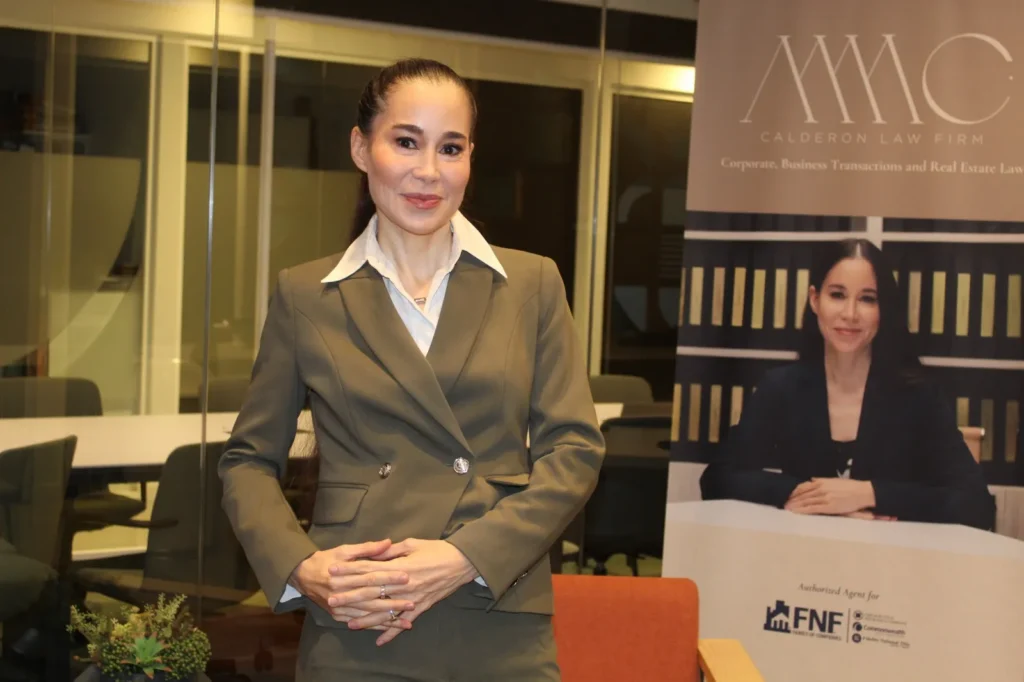
Asa part of this series, we had the pleasure to interview Maria Marta Calderon.
Maria Marta Calderon is an attorney licensed to practice law in both Argentina, a civil law jurisdiction, and Florida, USA, a common law jurisdiction. She graduated Magna Cum Laude from the University of Miami School of Law in 2012 and has since practiced at both boutique and national law firms. Her practice focuses on real estate, corporate law, and business transactions, representing U.S. and international clients in connection with a wide range of business matters and investments in Florida.
Thank you so much for joining us in this interview series! Before we dive in, our readers would love to “get to know you” a bit better. Can you tell us a bit about your ‘backstory’ and how you ended up where you are? Specifically we’d love to hear the story of how you began to lead your practice.
Ibegan my legal career in Argentina, working as an attorney for a leading sports media and broadcasting company that produced programming for Fox Sports throughout Latin America. That experience sparked my interest in international business and cross-border legal matters, particularly between the United States and Latin America.
To expand my expertise, I came to Miami to pursue an LL.M. at the University of Miami School of Law. While there, I interned with prestigious law firms, including Holland & Knight, and was introduced to the common law system. I found its practical and dynamic approach fascinating and decided to transition from the LL.M. program into the Juris Doctor (J.D.) program.
What began as an academic goal soon became a professional calling. I chose to remain in Florida, became licensed to practice law, and eventually founded my own practice, where I help clients navigate complex legal matters with an international perspective.
I’m a huge fan of mentorship throughout one’s career. None of us are able to achieve success without some help along the way. Who has been your biggest mentor? What was the most valuable lesson you learned from them?
While working as an attorney at Hinshaw & Culbertson LLP, an Am Law 200 firm, I had the opportunity to work with many exceptional lawyers. However, the person I consider my most influential mentor is Neil Rollnick.
As a young associate, having someone you can look up to and say, “That is the kind of attorney I aspire to become,” is invaluable. Neil was not only an outstanding lawyer but also an exceptional person. He treated everyone with the same respect and kindness, regardless of position or seniority.
Over time he began assigning me substantive work. One project involved preparing loan documentation for the refinancing of several commercial properties. After I submitted hundreds of pages of documents, he returned the next day visibly disappointed. He had printed everything and marked page after page with red corrections. I remember staying in the office until well after 2:00 a.m. reviewing every comment. While some corrections addressed genuine mistakes, many involved drafting preferences and nuances that I had not previously encountered. Because of experiences like that and his patient supervision, I learned a great deal.
He told me a story about a trial in which the quality of documents he had prepared was challenged. The judge rejected the criticism and remarked that the documents were flawless. Then he told me, “I want people to say the same thing about your documents one day.”
That lesson stayed with me. Often, when someone demands more from you, it is not because they wish you harm; it is because they see your potential and know you are capable of more.
From that point on, we developed a strong professional relationship, and I was eventually trusted to handle title matters on some of his largest transactions with minimal supervision.
From completing your degree to opening a practice and becoming a business owner, your path was most likely challenging. Can you share a story about one of your greatest struggles? Can you share what you did to overcome it?
I’ve faced a number of challenges throughout my life. I lost much of my family, many of them when I was very young, and I also lived through several economic crises in Argentina. To attend university in the United States, I had to take on significant debt because earning that degree was incredibly important to me.
However, the greatest personal limitation I had to overcome was my lack of fluency in English. I had to learn English and common law at the same time while pursuing my degree. I had taken some English classes before, but my English was still very basic. I knew I had to become proficient quickly if I wanted to succeed in law school.
I’ve always loved reading, and one of the first things I discovered in South Florida was the public library system. I decided that reading would be my fastest path to improving my English. My first choice was a book by Nietzsche, a philosopher I had enjoyed studying in Argentina. I quickly realized I couldn’t get past the first few pages.
So I changed my strategy. I went to the children’s section and started reading Harry Potter and other similar books. I read several books a week. By the time classes started, I was carrying my casebooks, class materials, and a huge English dictionary everywhere I went.
Given my limitations, I knew I couldn’t approach law school the same way as many of my classmates. Every lecture required extra work because I was learning both the material and the language simultaneously. As a result, I spent countless hours studying.
It was hard not to think, every weekend on my way to the library, about how much I would rather be at the beach or spending time with friends. But I knew that learning a new language, adapting to a new legal system, and succeeding academically at the same time would require hard work and sacrifice.
The moment I’ll never forget was receiving my first-semester grades. Seeing that I had earned mostly A’s and a few B+’s was incredibly rewarding. It showed me that while we can’t always control our circumstances, we can control our determination, discipline, and willingness to overcome obstacles.
Can you please give us your favorite “Life Lesson Quote”? Can you share a story about how that was relevant in your own life?
My favorite life lesson quote is from President Calvin Coolidge: “Nothing in this world can take the place of persistence… Persistence and determination alone are omnipotent.”
This quote has been especially meaningful in my life. When I decided to pursue a law degree in the United States and become licensed to practice law in Florida, English was my second language, I had limited financial resources, and I had no professional network in the U.S. Many people advised me not to try, noting that others with greater credentials and opportunities had attempted the same path and failed, particularly because passing the bar exam in a second language is extremely challenging.
Despite those doubts, I remained focused on my goal. Through hard work and persistence, I graduated from law school with honors in record time and passed the Florida Bar Exam with high marks. That experience taught me that persistence is not just about working hard. It is about continuing to move forward when there is no evidence yet that things will work out. Sometimes the only thing separating success from failure is staying in the game long enough for your efforts to pay off.
This is not easy work. What is your primary motivation and drive behind the work that you do?
My primary motivation is a genuine desire to keep growing and improving, not only as a professional, but also as a person. I enjoy being challenged, learning new things, and finding better ways to serve my clients.
As a business transaction attorney, I often have the privilege of being involved in some of the most important moments in my clients’ lives: launching a new business, acquiring a company, purchasing a property, expanding operations, or pursuing a long-term dream. I feel honored by the trust they place in me and take seriously the responsibility of protecting their interests.
My role is not simply to draft documents or close transactions. As a trusted advisor, my goal is to help clients achieve their objectives while identifying and managing risks before they become problems. Sometimes that means negotiating a better deal; other times it means advising a client not to proceed with a transaction that could expose them to unnecessary liability or future disputes.
What keeps the work interesting is that every client, business, and transaction is different. I am constantly exposed to new industries, ideas, challenges, and people. I learn something from almost every matter I handle, and that continuous opportunity to grow while helping others achieve their goals is what drives me every day.
What are some of the most interesting or exciting projects you are working on now?
Due to confidentiality obligations, I cannot discuss several matters in detail; however, my work has included handling title work for the acquisition of a 394-unit apartment complex in Davie for $119 million, representing clients in the exchange and acquisition of commercial properties in Florida and Argentina, and assisting with the structuring and refinancing of multiple commercial buildings across several states. I am currently assisting a client with the financing and development of a multi-unit residential project, as well as international financing involving an investment group with commercial and residential properties in Florida.
Fantastic. Let’s now shift to discussing the business of law. Can you tell us a bit about the nature of your practice and what you focus on?
My practice is focused on real estate, corporate, and business transactions, representing entrepreneurs, investors, developers, lenders, and business owners in a wide range of matters. I regularly advise clients on commercial and residential real estate acquisitions and sales, business formations, corporate governance, contract negotiations, financing transactions, and cross-border investments.
A significant part of my work involves structuring and documenting transactions, conducting due diligence, negotiating agreements, resolving title and closing issues, and helping clients identify and mitigate legal and business risks. I also serve as closing and title agent in real estate transactions, working closely with buyers, sellers, lenders, brokers, and other professionals to bring transactions to a successful closing.
You are a successful attorney. Which three character traits do you think were most instrumental to your success? What unique qualities do you have that others may not? Can you please share a story or example for each?
As an attorney, three qualities have been most instrumental to my success: thoroughness, integrity, and a commitment to personalized service.
Thoroughness
I believe that success in the legal profession often comes down to noticing details that others may overlook. Every document, fact, and legal issue deserves careful attention. Many people view contracts as boilerplate documents that simply require changing names and a few provisions. I disagree. Every word in a contract should serve a purpose, and if there is no good reason for a provision to be included, it should not be there.
I once represented a restaurant tenant in the negotiation of a commercial lease renewal. While reviewing the documents, I noticed that a rent cap provision contained in the original lease had been omitted from the new lease. I encouraged my client to investigate further and, in doing so, they discovered they had been overcharged rent for nearly ten years. As a result, they were able to recover substantial amounts and apply those credits toward future rent obligations.
Integrity
Integrity is the foundation of my practice. Clients trust me with important decisions, and I believe honesty and transparency are essential, even when the advice may not be what they want to hear.
Early in my career, I encountered situations where others involved in real estate transactions preferred that buyers not receive a detailed explanation of contract terms for fear it might jeopardize a closing. I took the opposite approach. My role as an attorney is to serve as my client’s trusted advisor. That means providing honest, independent legal advice and ensuring that clients fully understand both the opportunities and the risks involved in a transaction. My duty is not simply to help close a deal, but to protect my clients’ interests and help them make informed decisions. I believe that fulfilling that responsibility is one of the most important obligations of our profession.
Personalized Service
One quality that distinguishes my practice is my commitment to giving every client the same level of attention and care, regardless of the size of the matter. Every legal issue is important to the person facing it, and every client deserves to feel heard, respected, and supported.
Over the years, I have often been told that I devote the same energy to smaller matters as I do to larger transactions. That is intentional. If I accept a matter, I am committed to handling it properly. Many of the clients who initially came to me with relatively small legal needs later returned with more significant matters or referred friends, family members, and business associates. To me, that reflects the value of treating every client and every matter with the attention it deserves.
Do you think where you went to school has any bearing on your success? How important is it for a lawyer to go to a top-tier school?
A strong legal education certainly provides valuable opportunities, and I am grateful for the education I received at the University of Miami School of Law. That said, I do not believe a lawyer’s long-term success is determined by the name of the school on their diploma. Success in the legal profession is built over time through hard work, professionalism, judgment, integrity, and the ability to build trust with clients and colleagues. A top-tier school may help open doors early in a career, but what keeps those doors open is the quality of your work and the reputation you build over many years.
Managing being a law practitioner and a business owner is a constant balancing act. How do you manage both roles?
It is definitely a balancing act. Law school teaches you how to be a lawyer, but it does not teach you how to run a business. When you own a firm, you have to wear both hats. One moment you are negotiating a contract or advising a client, and the next you are dealing with technology, finances, hiring, or marketing. The hardest part is that client matters always feel more urgent, so it is easy to put the business side aside. I have learned that if I do not deliberately set aside time to focus on the firm itself, there will always be another client matter demanding my attention. Yet some of the most important work I do involves improving systems, developing relationships, and planning for the future. Those things may not feel urgent on a given day, but they are essential if you want to build a firm that continues to grow and serve clients well.
Can you help articulate the entrepreneurial skills a lawyer needs to run and lead a successful law firm?
Running a successful law firm requires many of the same entrepreneurial skills needed to run any business. Lawyers must be able to build relationships, communicate effectively, manage finances, develop talent, market their services, and adapt to changing conditions. Perhaps most importantly, they must be comfortable making decisions with imperfect information. Many lawyers are trained to identify risks, but business owners must also be able to identify opportunities. The most successful law firm leaders balance legal excellence with business judgment and understand that client service, team culture, and operational efficiency are all connected.
As a business owner you spend most of your time working IN your practice, seeing clients. When and how do you shift to working ON your practice? (Marketing, upgrading systems, growing your practice, etc.) How much time do you spend on the business elements?
Like many law firm owners, I spend the majority of my time serving clients and handling legal work. The challenge is that there is always another email to answer, contract to review, or issue that needs immediate attention. I have learned that if I don’t deliberately make time to work on the firm itself, those things never get done. So I try to set aside time every week to look at our processes, finances, technology, and long-term goals. Sometimes it is more, sometimes less, depending on what is happening with client matters. Ironically, some of the most valuable work I do is not legal work at all — it’s finding ways to make the firm run more efficiently, serve clients better, and position it for future growth.
Can you share some specific, non intuitive insights from your personal experience about how a leader of a law firm should manage personnel, hire and fire, generate leads, advertise, and manage finances?
Manage personnel: one non-intuitive lesson I have learned is that people do not stay at a law firm solely because of compensation. They stay because they feel respected, supported, and part of a team. Clear expectations, consistent communication, and genuine appreciation often have a greater impact on performance and retention than financial incentives alone.
Hire and fire: when hiring, I focus less on technical skills, which can often be taught, and more on integrity, work ethic, attention to detail, and attitude. Skills can be developed; character is much harder to change. Conversely, when an employee is not a good fit, delaying a difficult decision rarely benefits anyone. Addressing performance issues early and acting decisively when necessary is usually better for both the firm and the individual.
Generate leads: the most valuable business development strategy is not networking events or marketing campaigns, it is doing excellent work for existing clients. The majority of my best opportunities have come from referrals by satisfied clients and professional contacts who trust that I will treat their referrals with the same care and attention that I gave them.
Advertise: in my experience, clients are more interested in authenticity and credibility than advertising. Educational content, community involvement, speaking engagements, and building genuine relationships have generated far more meaningful opportunities than traditional advertising. People hire lawyers they trust.
Manage finances: one of the most important lessons I have learned is to run a law firm like a business, not just a legal practice. It is easy to focus on generating revenue and overlook expenses, collections, and cash flow. Consistently monitoring financial performance, maintaining reserves, and making disciplined decisions during both good and challenging periods are essential to long-term success.
Press enter or click to view image in full size
Ok, thank you. Here is the main question of our interview about the business side of law. What are your “5 Things An Attorney Needs To Know In Order To Create A Successful And Thriving Law Practice”? (Please share a story or example for each.)
1. Law is a profession, but a law firm is a business.
Many lawyers are excellent technicians but never learn how to run a business. Understanding finances, marketing, operations, and hiring is just as important as understanding the law. When I started my career, I quickly realized that being a good lawyer alone would not guarantee success. A law firm must generate revenue, manage expenses, and create systems that allow the business to grow. The attorneys who understand both law and business have a significant advantage.
2. Client experience matters as much as legal expertise
Clients often judge their lawyer less by legal brilliance and more by communication, responsiveness, and trust. One lesson I learned early on is that clients remember whether you returned their calls, kept them informed, and treated them with respect. A client who feels heard and informed is much more likely to become a long-term client and referral source.
3. Reputation is Built Over Time
Reputation compounds over time. Every interaction, every case, and every relationship contributes to your professional brand. As an immigrant building a career in a new country, I did not have a large network to rely on. I learned that credibility is built one relationship at a time. Years later, many opportunities came not from advertising but from people who remembered my work and trusted me.
4. Never Get “Too Comfortable”
One of the most important things an attorney needs to know to build a successful and thriving law practice is not to get too comfortable. The law is constantly evolving and so is the world around it. To stay effective and relevant, attorneys must commit to continuous learning through ongoing legal education, staying up to date with new cases and developments, reading articles, and remaining actively engaged in the profession, while always seeking growth.
5. Resilience Matters
Every lawyer and professional faces setbacks, whether it is a difficult case, a slow economy, missed opportunities, or professional disappointments. What matters most is how you respond to them. From my own experience dealing with personal loss, financial uncertainty, and building a career in a new country, I learned that success does not come from avoiding obstacles. It comes from pushing forward through them, using those moments to explore new things, question yourself, and make plans to move forward. Struggle and crisis can be seen as something negative or as an opportunity to grow. I chose the second option.
You are a person of enormous influence. If you could inspire a movement that would bring the most amount of good to the most amount of people, what would that be? You never know what your idea can trigger. 🙂
If I could inspire one movement, it would be encouraging people to approach differences with curiosity rather than fear. Throughout my life, I have always been fascinated by people, cultures, traditions, and perspectives that are different from my own. Some of the most valuable lessons I have learned have come from interacting with people whose backgrounds, experiences, and ways of thinking were very different from mine.
I believe that too often people fear, distrust, or even dislike what is unfamiliar. Yet those differences are often our greatest opportunity to learn, grow, and become better versions of ourselves. We do not have to agree on everything to learn from one another. In fact, meaningful growth often comes from respectfully listening to perspectives that challenge our own.
As someone who has lived and practiced in different countries and cultures, I have seen firsthand that people have far more in common than they realize. If more of us approached differences with openness and curiosity instead of judgment, I believe we would build stronger communities, create more opportunities, and leave the next generation a better world than the one we inherited.
How can our readers further follow your work online?
Readers can connect with me through my law firm’s website and on LinkedIn. While I am still in the early stages of expanding my online presence, I enjoy sharing insights on real estate, business, and transactional matters whenever I can. I also enjoy connecting with fellow professionals, entrepreneurs, and members of the community. Some of the most rewarding opportunities in my career have started with a simple conversation, so I always welcome the chance to connect and exchange ideas.
This was very inspiring. Thank you so much for the time you spent with this. We wish you continued success and good health!
Featured in Authority Magazine on Medium — Read the original article here: https://medium.com/authority-magazine/the-business-side-of-law-maria-marta-calderon-on-5-things-you-need-to-create-or-lead-a-successful-0523ad962fdf
